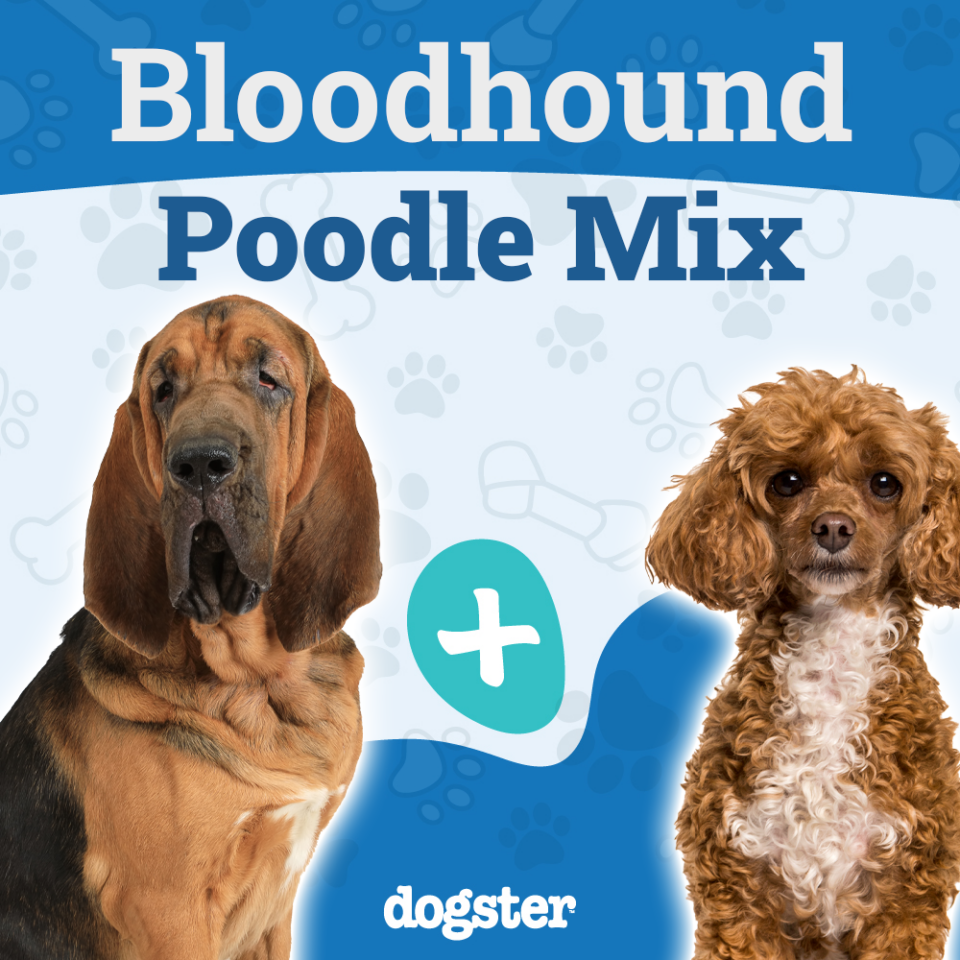


If you’ve ever dreamed of owning a one-of-a-kind dog, the Bloodhound Poodle mix, affectionately known as the Bloodhoodle, might just be the pet for you. These pups are quite the rare find, but they’re worth the search due to their active and sociable nature.
The Bloodhoodle is a curious blend of the Bloodhound and the Poodle, resulting in a friendly and intelligent canine companion. Standing anywhere between 23 to 27 inches tall and weighing from 60 to 140 pounds, these dogs are quite the presence, and their adorable looks vary greatly depending on which parent they take after more. They generally boast a friendly temperament and have the kind of high energy that ensures they’ll keep their owners on their toes. Each Bloodhoodle is a little different, but one thing’s certain—they are quite the cuddle bugs and love to be part of the family activities.
Finding a Bloodhoodle puppy may take a bit of effort since breeders are not widespread, and you’re unlikely to find them at local shelters. It’s best to seek out a reputable breeder who can provide clear information on the dog’s family history. Occasionally, rescue groups for Bloodhounds or Poodles might offer this mix, so checking there could be fruitful. As with any mix breed, the temperament of a Bloodhound Poodle pup depends on their parentage. But in general, these dogs are known for their sociable and happy-go-lucky attitude.
When it comes to family life, Bloodhoodles are generally well-suited for active families or singles who have time to provide them with ample exercise and social interaction. They are friendly towards older children but can be quite boisterous, which requires supervision with younger kids. Their sociability also extends to other pets, although early socialization is key, especially if they inherit more of the Bloodhound’s prey drive tendencies.
Caring for a Bloodhoodle involves understanding their dietary needs, as they will require high-quality dog food potentially tailored to either Poodle or Bloodhound sensitivities. Exercise is non-negotiable—expect to engage your pet in at least an hour of physical activity daily. Grooming needs depend largely on which parent they resemble more. Those with curlier, Poodle-like coats might need more frequent grooming sessions. These dogs are medium shedders, and keeping their coat healthy involves regular brushing along with occasional baths, ear cleaning, and nail trims.
Health-wise, Bloodhoodles, like many mixed breeds, can inherit issues from their parents, such as ear infections, allergies, or more serious conditions like bloat and Addison’s disease. Regular vet check-ups are recommended to keep potential health issues in check.
Interestingly, if you’re not fond of the name Bloodhoodle, they also go by alternate names like ‘Bloodles’ or ‘Poohounds’. The Bloodhound’s illustrious history includes being bred by monks in Western Europe more than a thousand years ago, giving it quite the historical pedigree. Meanwhile, despite the Poodle’s German origins, France has adopted it as their national dog.
Overall, while the Bloodhound Poodle mix requires commitment and care, they make for affectionate and lively family pets. Their unique combination of sociable nature and playful demeanor is certain to bring joy and excitement to any household fortunate enough to have one.