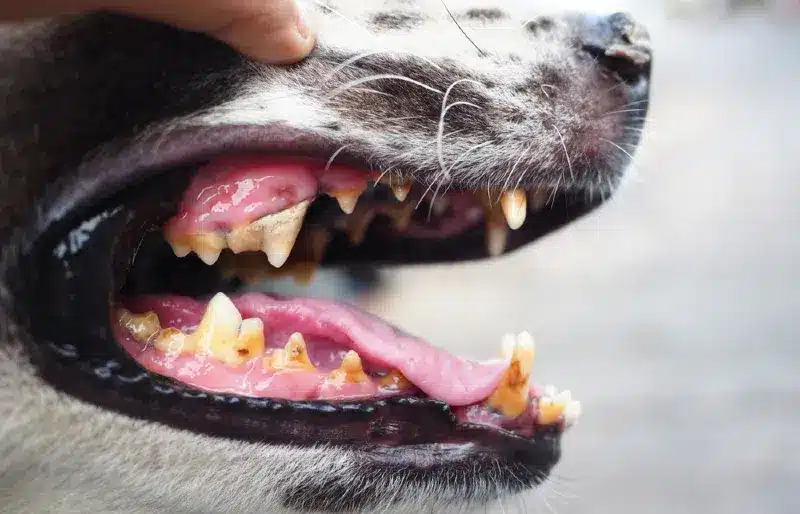


Ever wonder about the state of your dog’s teeth? Most dogs will face dental diseases, but cavities are rare.
- Dog cavities, known as caries, can occur in the upper molars, often going unnoticed until they cause discomfort.
- Cavities go through different stages, from affecting just the enamel to reaching the pulp, leading to pain.
- Diagnosing cavities usually requires a vet and general anesthesia since they’re hard to spot in a conscious dog.
- Treating and preventing cavities is all about ensuring your dog’s dental health with regular vet visits.
Let’s face it, brushing your dog’s teeth isn’t exactly top of the list, but ignoring dental health can lead to big problems. While most dogs do encounter some sort of dental disease, cavities or caries aren’t all that common. You’ve probably noticed that our dogs have diets and dental setups quite unlike ours, which is why cavities are rare in our furry pals.
In dogs, cavities, or caries, tend to hide along the chewing surfaces of the upper molars. They’re like sneaky little thieves, often going unnoticed until they reach a stage where they cause some serious pain. Cavities come in various forms, affecting everything from the enamel to the pulp. It’s a bit like peeling an onion, with the problem becoming more severe the deeper it goes.
Interestingly, our dogs are pretty good at hiding mouth pain, continuing to eat like nothing’s wrong. But as pet owners, it’s good to watch for signs like chewing on just one side, dropping food, a drop in appetite, drooling, or bad breath. They might even avoid you touching their face – a big clue something’s up in the dental department.
Cavities form when mouth bacteria ferment carbohydrates, releasing acids that attack the enamel. As the decay creeps in deeper, it reaches the pulp, resulting in discomfort and infection. However, many dogs don’t get cavities as easily as humans because their mouths are different terrains. For instance, their saliva is more alkaline, food doesn’t linger due to their pointy teeth, and they don’t consume as much sugar.
Spotting a cavity in dogs is no walk in the park. It’s often detected during a Comprehensive Oral Health Assessment and Treatment (COHAT), which is done under anesthesia. This includes a full dental checkup, cleaning, and possibly even radiographs. If cavities are severe, treatment might go all the way to tooth extraction.
Worried about your dog’s chompers? Prevention is key! Avoid sugary snacks, brush those teeth daily if possible with pet-safe toothpaste, and get into the habit early. If brushing seems like an Olympic sport for your pooch, talk to the vet about alternatives like dental chews. And remember, regular vet check-ups are your best ally.
Dr. Fraser Hale, a veterinary dental specialist, found in his review that only a small percentage of dogs had cavities, with larger breeds like German Shepherds and Labs being a bit more susceptible. Luckily, structural differences in dogs’ mouths save them from the cavity woes humans face. However, it underscores the importance of keeping a vigilant eye on our pet’s oral hygiene.
While not common, staying ahead of any potential dental issues is the best way to ensure a happy, healthy pup.